
Last updated November 23, 2026
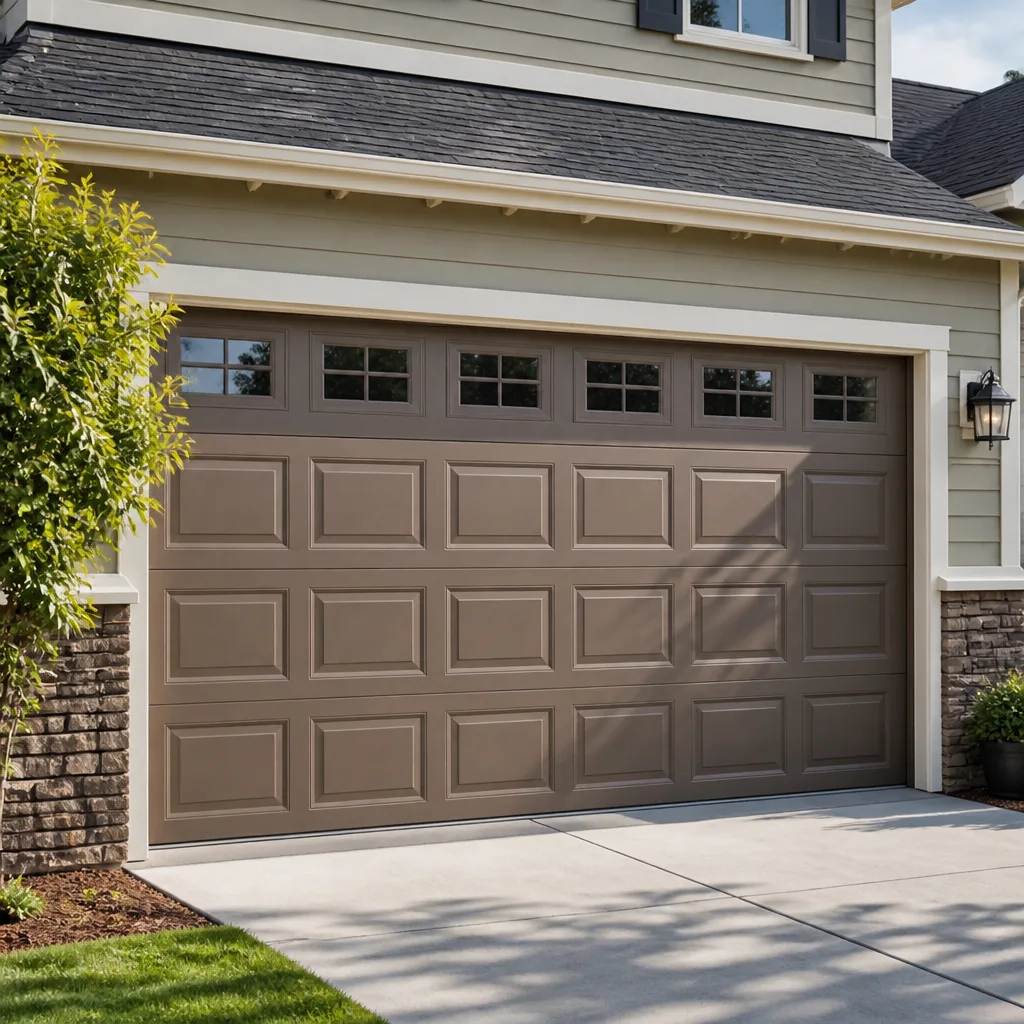 Raised-panel steel
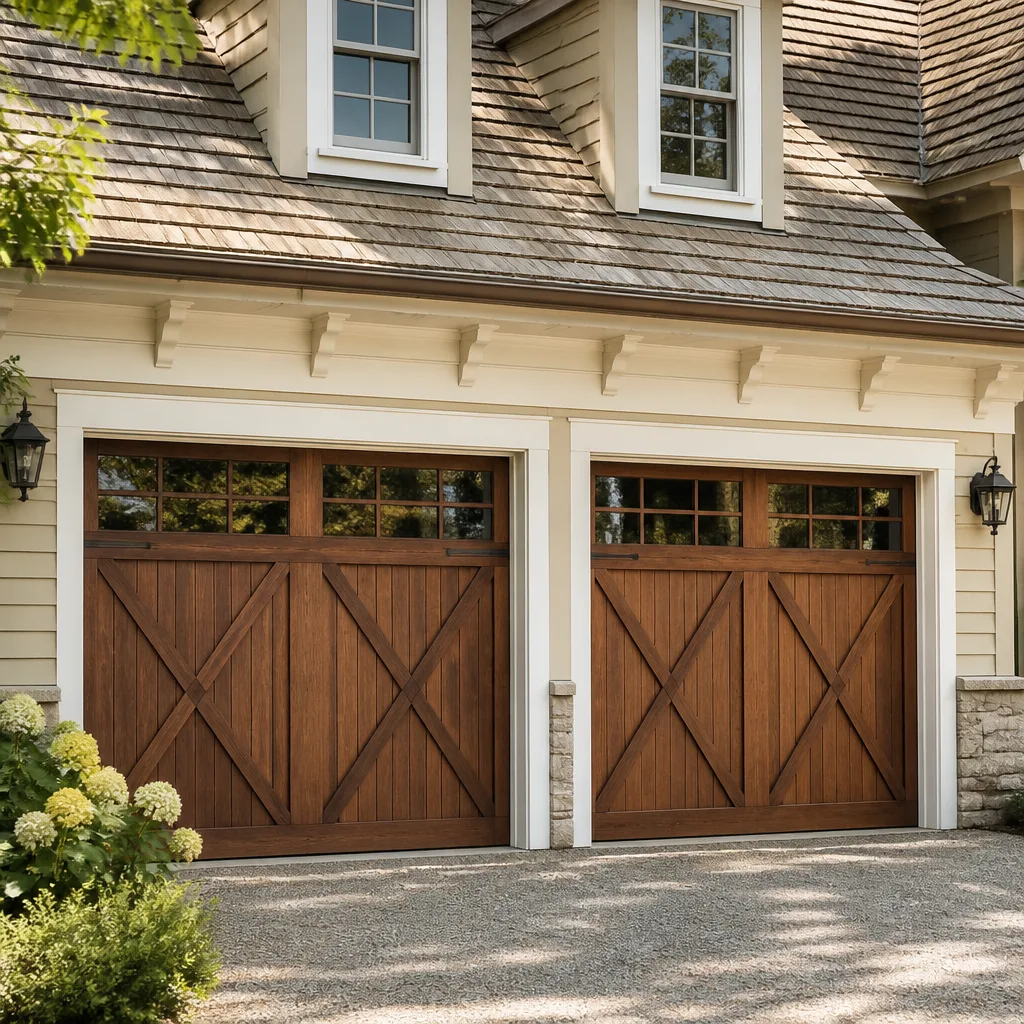 Carriage house
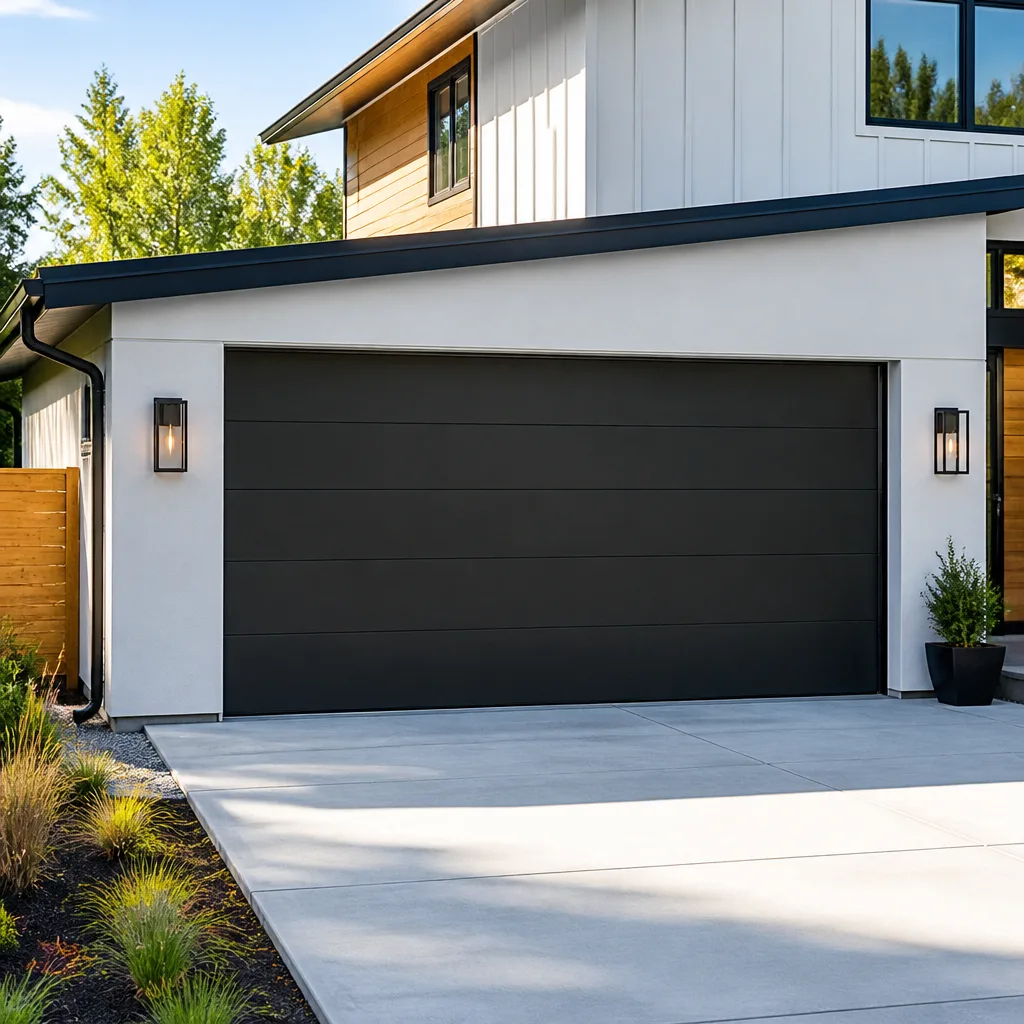 Modern flush
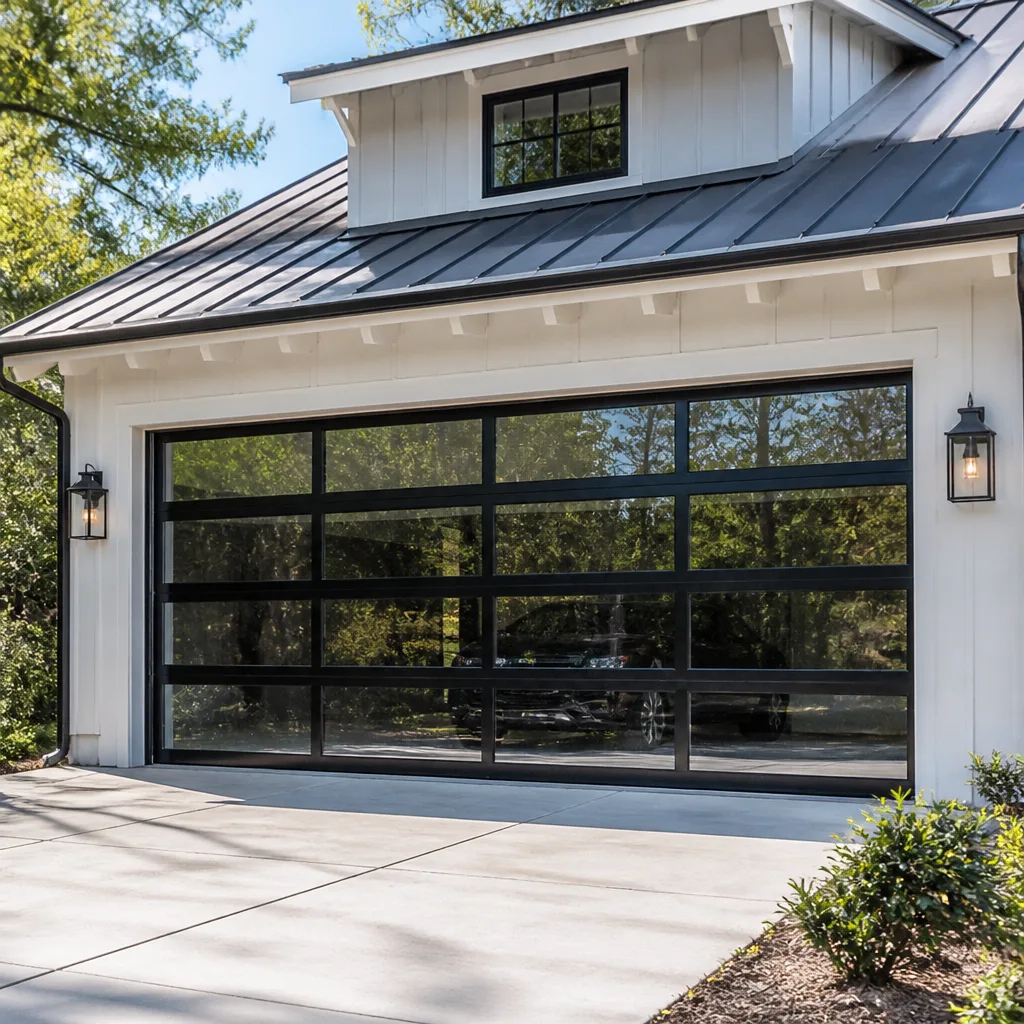 Full-view glass
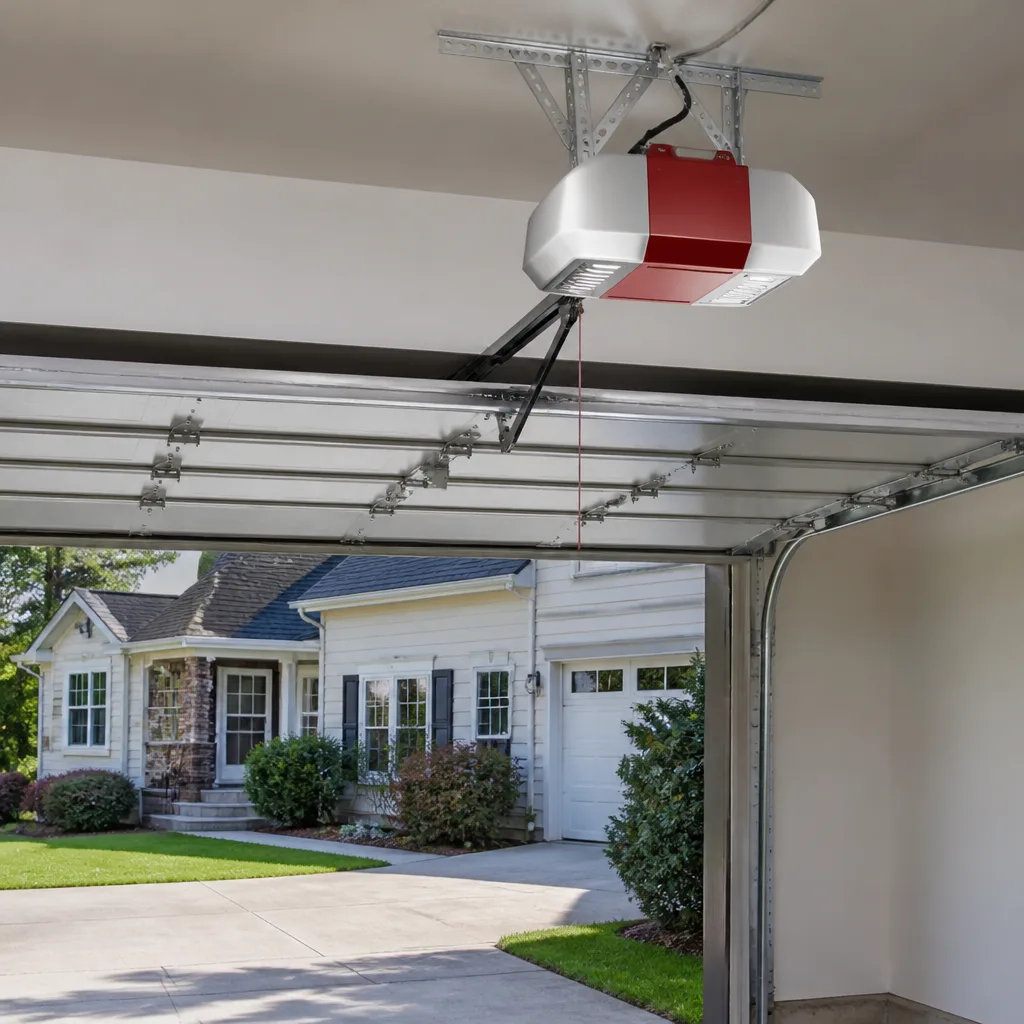 LiftMaster openers
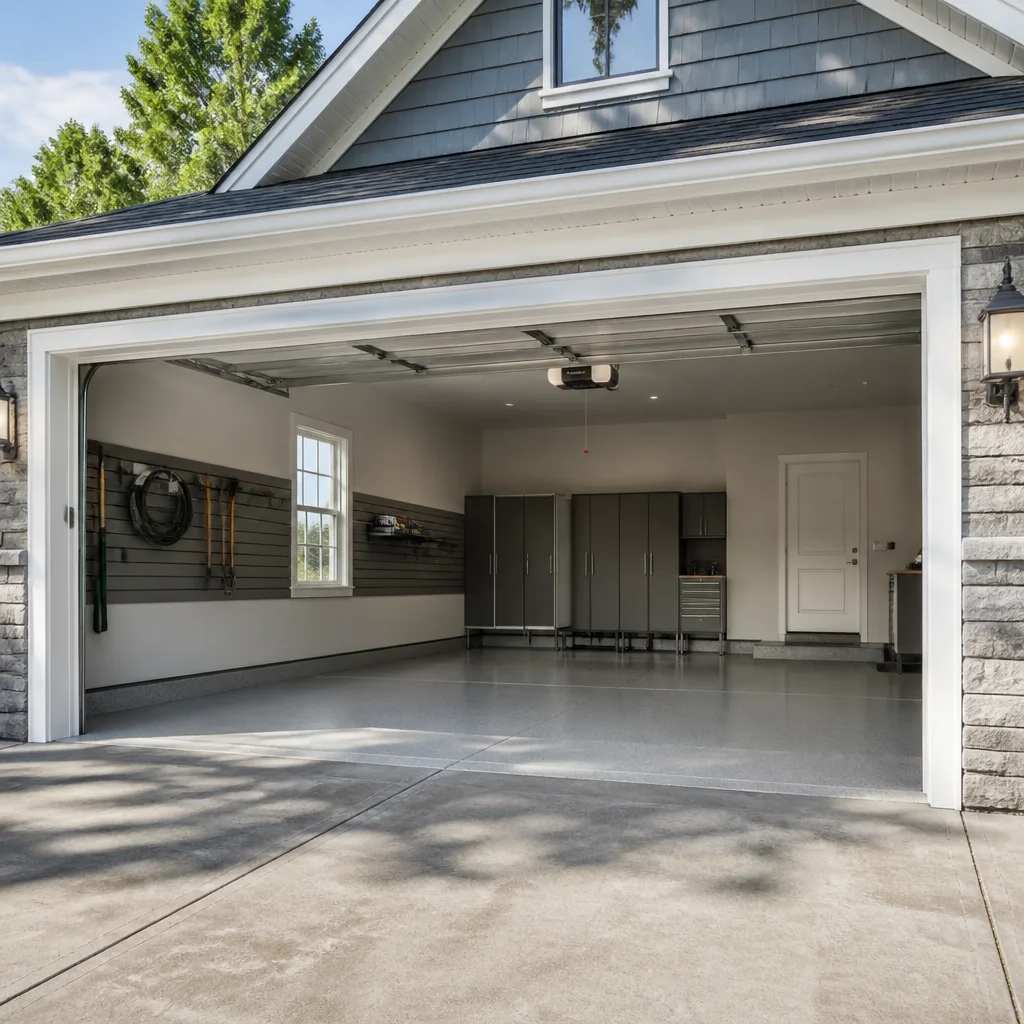 Chamberlain openers
Full 25-point door and opener safety check with every visit - springs, cables, rollers, tracks, and your LiftMaster or Chamberlain opener included
You get a price before we start. It does not change when the pro arrives.
Get your free estimateDIY vs Professional Garage Door: The Naperville Homeowner’s Decision Guide
Most garage door choices don’t fail because the homeowner lacked skill. They fail because the wrong task got lumped in with the easy ones. A squeaky roller and a wound torsion spring live on the same door, but they don’t belong in the same conversation. One is a Saturday project. The other stores enough energy to send a winding bar through drywall, which is why even experienced general contractors hand spring work to a specialist. This guide draws the line task by task, so you can see exactly where safe DIY ends and real risk begins, and what that means for a Naperville home.
Quick Answer
Safe garage door DIY in Naperville covers lubrication, balancing, weather seals, visual inspections, and light roller swaps. Spring, cable, and panel-tension work should always go to a trained specialist, because a mistake there can injure you and can void warranties on the door and opener. Most homeowners save real money on the small jobs and lose it on the risky ones, so the smart split is DIY for upkeep and a professional for anything under tension.
Styles & brands we work with
- Raised-panel steel
- Carriage house
- Modern flush
- Full-view glass
- LiftMaster openers
- Chamberlain openers
Table of Contents
- The Task-by-Task Risk Matrix
- The Tools That Separate Safe DIY From Dangerous DIY
- Springs and Cables: Why This Is the Hard Line
- Opener Warranties and Self-Installation
- Illinois Liability and Attached Townhome Garages
- The Honest Cost Comparison
- What Naperville Weather Does to Your Door
- When to Call a Professional
The Task-by-Task Risk Matrix
The DIY question only makes sense when you break the garage door into its actual jobs. Sorting them by risk is the fastest way to know what you should touch and what you shouldn’t. Here’s how we’d lay it out for a typical Naperville homeowner.
| Task | Risk Level | DIY Reasonable? |
|---|---|---|
| Lubricating hinges, rollers, and tracks | Low | Yes |
| Testing the safety reverse and balance | Low | Yes |
| Replacing weather seal and bottom rubber | Low | Yes |
| Straightening a slightly bent track end | Low to moderate | Usually, with care |
| Swapping a non-tensioned roller or hinge | Moderate | Yes, if the door is fully relaxed |
| Adjusting opener travel and force limits | Moderate | Yes, following the manual |
| Replacing a torsion or extension spring | High | No |
| Replacing cables on a tensioned door | High | No |
| Rewinding or resetting drum and cable tension | High | No |
| Replacing a full door or panels | Moderate to high | Rarely worth it |
The pattern is simple. If a task can be done with the door closed and no stored energy in play, it lives on the safe side. The moment you’re working with a spring or a cable, you’re dealing with a component that can release its stored force in an instant. That’s not a skill gap you can close with a YouTube video. It’s a category of work that calls for training, the right tools, and a person who knows how the tension should feel on your specific door.
In our experience around Naperville, the mistakes that go wrong aren’t the ones people expect. It’s rarely the lubrication job. It’s the homeowner who watched a clip and decided a spring swap looked manageable, then discovered the winding bars weren’t long enough or the door wasn’t balanced the way the video assumed.
The Tools That Separate Safe DIY From Dangerous DIY
One test tells you whether a job belongs in your garage or a specialist’s: look at what you’d need to buy or rent. If the tools are sitting in your toolbox, the job is probably for you. If they’re not available to a homeowner at a big-box store in any normal way, that’s a signal.
For everyday DIY work, this is what’s actually helpful:
- A can of garage door lubricant (not the multi-purpose spray)
- A sturdy step ladder
- A socket set and basic screwdrivers
- A tape measure and a level
- Work gloves and safety glasses
Now compare that to the spring and cable work. Spring jobs need proper winding bars of the correct diameter and length for the shaft, not improvised rods. They need a solid understanding of how many turns the spring should be wound and how to check door balance before anyone lets go. Cable work needs tension handled in a controlled sequence so nothing snaps. These tools are sold to the trade, not sitting on a shelf for the homeowner to grab. That’s not because the industry wants to keep secrets. It’s because the tools exist to make a dangerous job safer, and if you don’t already own them or know how to use them, the safest move is not to start.
There’s a second element that’s harder to buy: knowing how your door is supposed to behave when the job is done. Our technicians have up to 15 years of experience, and much of that is reading a door by feel and by sound rather than by measurement. That built-in sense of “this one isn’t right yet” is what separates a specialist from a homeowner who’s done one repair, and it matters most on tensioned components.
Springs and Cables: Why This Is the Hard Line
This is the section to read twice. The torsion spring above your door is the part that lifts the weight of the door so you don’t have to. It’s under constant tension, and when it’s wound it holds that energy in a very small space. When a spring fails, it doesn’t just stop working. It releases. That’s why the standard advice across the trade is to leave spring and cable work to a trained person, and it’s the reason we treat garage door repair work involving springs as a specialty rather than a routine fix.
Here’s what that looks like in practice, in general terms:
- Identify the spring type. Most Naperville doors have a torsion spring on a central shaft above the door, or extension springs running along the sides. Each is handled differently, and the tools and safety approach are different.
- Relieve tension safely and in order. The correct sequence is specific to the setup. Getting it wrong is where injuries happen. It requires winding bars and a controlled method.
- Replace with a matched spring. Spring size, wire gauge, and length need to match the door’s weight, not be guessed. A mismatched spring can be a safety issue even after it’s installed.
- Balance the door and test it. After the new spring is on, the door needs to balance at mid-height so the opener isn’t straining and the safety reverse is reliable.
We don’t hand out step-by-step directions for this, and we’d ask you not to look for them online. What we can tell you is why a professional call makes sense here. A trained technician can bolt on the right spring for your door, balance it correctly, and check that the opener’s safety features still work. That takes the guesswork out and keeps you out of the danger zone. If your spring is broken now, don’t touch it. Call a professional and let them handle the next step. It’s the one time a same-day call is genuinely worth it, and this is the kind of work our Naperville Garage Door Repair Pros team handles as a core service, not an afterthought.
Opener Warranties and Self-Installation
Installation is where the cost-saving logic gets blurrier, because the money you save on labor can quietly disappear if a warranty claim gets denied later. Opener warranties vary by brand and model, and many of the biggest names in Naperville garages, including LiftMaster, Chamberlain, and Genie, write specific language about how the unit must be installed. Before you buy, read the warranty terms directly on the manufacturer’s documentation. The specifics are not something we’d guess at on your behalf.
Here’s how the picture usually breaks down:
- Opener swaps onto an existing door. Some manufacturers allow this as a homeowner install if the door’s existing hardware and safety features are compatible. Others require professional installation for coverage to hold.
- New opener on a new door. This rarely keeps the warranty intact when done DIY, because the door and opener both need to be set up to work together and the tension on the door matters.
- Smart opener features. Newer openers with app control often have specific installation requirements, and some brands only honor online features when set up by an approved installer.
There’s also the door side of the warranty to watch. Door makers like Clopay and Amarr write coverage around proper installation. If the door is hung out of balance or the tracks aren’t plumb, that can be treated as an installation problem rather than a manufacturer defect, and the warranty can get complicated. If you’re not certain whether a DIY install keeps your coverage, contact the manufacturer’s support line before you start. Read the fine print once, and the decision becomes much clearer.
Illinois Liability and Attached Townhome Garages
Most Naperville neighborhoods have a mix of detached garages and attached townhome garages, and the townhome layout changes the calculation. When a garage shares a wall or a ceiling structure with a neighboring unit, a spring or cable that fails suddenly can affect more than your own car. A winding bar that slips doesn’t necessarily stop at your drywall. That’s a strong argument for professional work in attached configurations, and it’s not a scare tactic. It’s a straightforward consequence of where the stored energy is pointing.
The liability side matters too. If a DIY repair causes damage to a shared wall, a neighbor’s car, or a common structure, Illinois homeowner policies handle it differently than standalone garage work. How much a policy covers, whether an insurer considers DIY repair a contributing factor, and how you document the repair all depend on the specific policy. We’re not insurance professionals and wouldn’t tell you how a claim would be handled. What we’d say is to check with your own insurer before any repair involving the shared structure of an attached garage, and to keep the receipts if you’re planning to sell. A written record of professional work is easier to pass along to the next owner in a townhome sale.
Naperville’s older townhome communities and newer attached developments have slightly different garage setups, and it’s worth looking at the wall, ceiling, and how the torsion shaft is mounted before starting any work on a shared garage. When the structure is shared, the cost of getting it wrong lands on someone other than you. That’s a good reason to have the work done right the first time.
The Honest Cost Comparison
DIY saves money in a few places and loses it in others. The trick is being honest about which is which, so you don’t spend hours on a job that ends with a professional call anyway.
Where DIY genuinely wins:
- Basic lubrication and adjustment. A can of lubricant and a little time is far cheaper than any service call. Nothing to lose if it doesn’t fully fix a noise, and the door is smoother for it.
- Weather seal. A bottom rubber replacement is inexpensive and straightforward on most doors, and it pays for itself in keeping Naperville’s winter drafts out.
- Visual inspections. Free, quick, and can catch a problem before it becomes a bigger one.
Where DIY typically costs more:
- Springs and cables. The price of the part is not the issue. The tools, time, and risk aren’t priced into a cheap DIY kit, and the professional call that ends up being made anyway is not a saving.
- Opener installation. Add up the unit, the tools you might not own, the install time, and the potential warranty complication. The gap to a professional install shrinks fast.
- Door replacement. Removal and install of a full door is heavy, awkward work, and the risk of damage to the door, the wall, or yourself is real. A door install involves measuring, ordering, and setting up rather than a same-day fix, and a written garage door installation estimate is the way to know the real number before you commit.
One point that comes up a lot: DIY repair is not automatically cheaper even if the part is cheap. If a spring gets swapped incorrectly and damages a nearby component, or a door is left out of balance and chews through the opener, the money adds up quickly. Our written estimates are free, and the price is set before work begins. That’s the simplest way to compare, since you know your real number instead of guessing.
If the job starts to feel beyond the basic stuff, it probably is. A quick call to a specialist can tell you whether you’re looking at a small fix or a bigger one, and that conversation usually settles the DIY question faster than any list.
What Naperville Weather Does to Your Door
Garage doors in Naperville take a beating from the seasons. Not because of any single dramatic event, but because of the cycle. A few weeks of summer heat and humidity, followed by a deep freeze, followed by more thaw, does more damage to door hardware than most homeowners expect. It’s worth knowing what to look for as the weather turns.
- Winter freeze and thaw. Cold nights followed by sun on the door can make the bottom seal brittle. That’s when you notice drafts under the door or a light showing through the gap.
- Summer heat and humidity. Wood and some composite panels expand and contract more than metal. Hinges and rollers loosen in the heat, and a door that was quiet in March can start to rattle by August.
- Rain and melting snow. Moisture at the threshold works on the bottom rubber first, so the seal is the most weather-prone part of the door.
This is where a little DIY care pays off. A quick inspection of the bottom seal each fall, some lubrication on the moving parts, and a look at whether the door opens and closes smoothly will catch most seasonal issues early. It won’t stop a spring from eventually reaching the end of its life. Nothing does. But it will keep the smaller parts from accelerating the wear on the bigger ones, and it gives you a clear sense of when a problem is worth calling about. An opener that starts struggling in the cold, for example, could be pointing at a door that isn’t balanced. That’s a job worth looking at directly, and you can read more about the specific fixes at garage door opener repair if the opener side is where the trouble starts.
See the difference
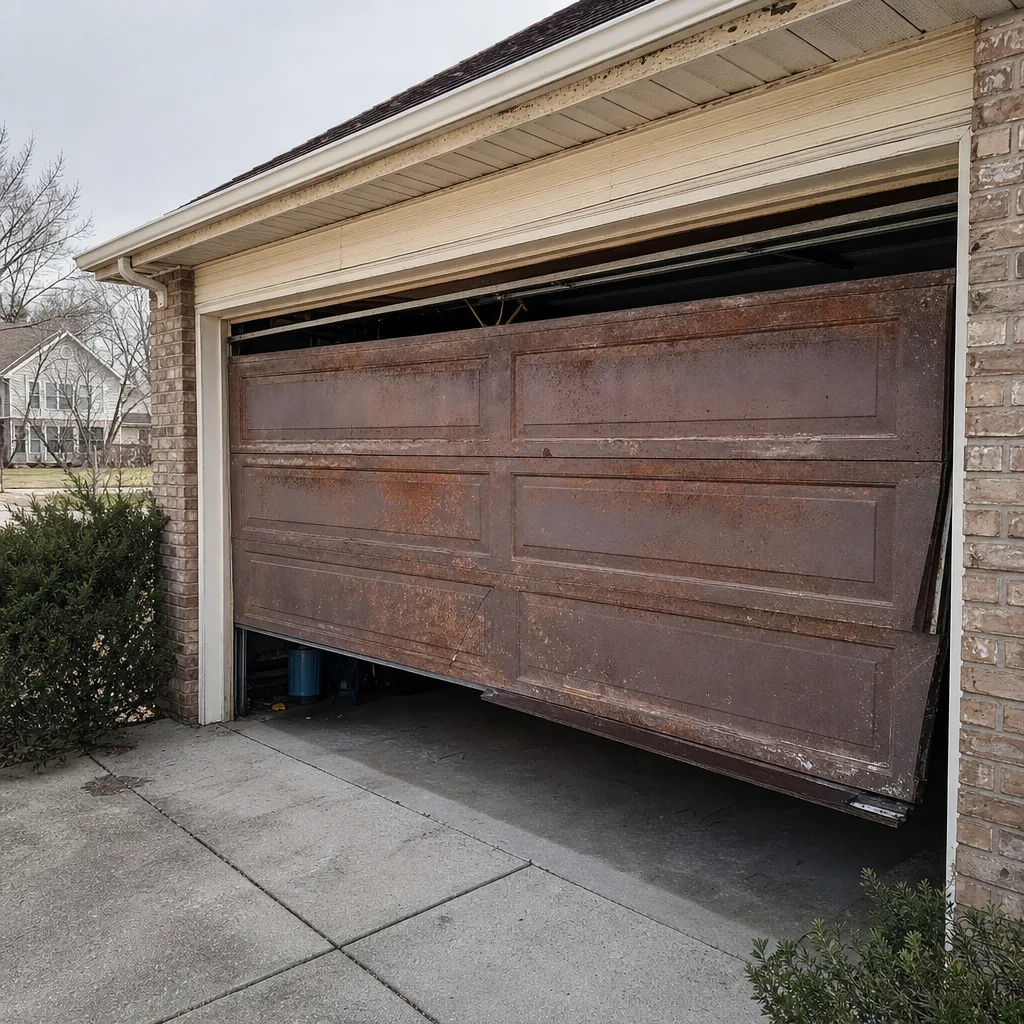 Before
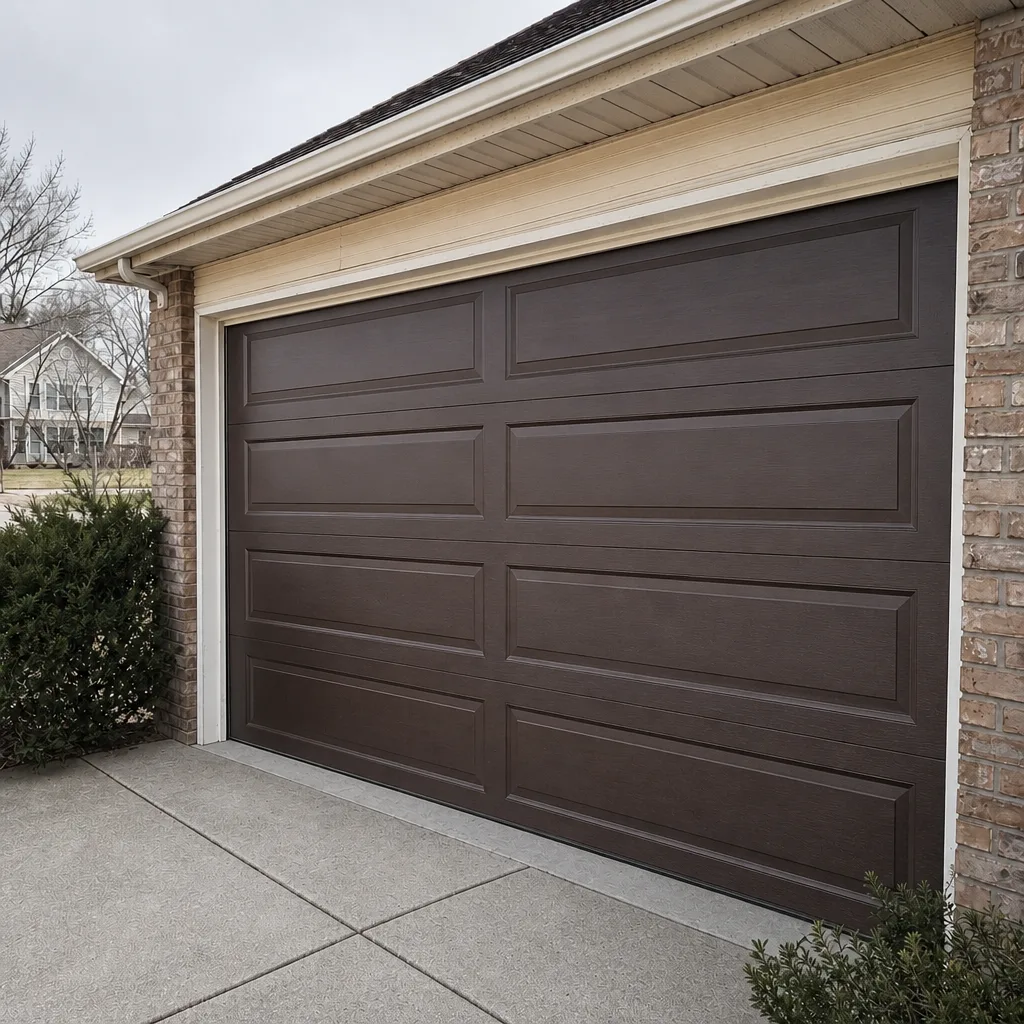 After
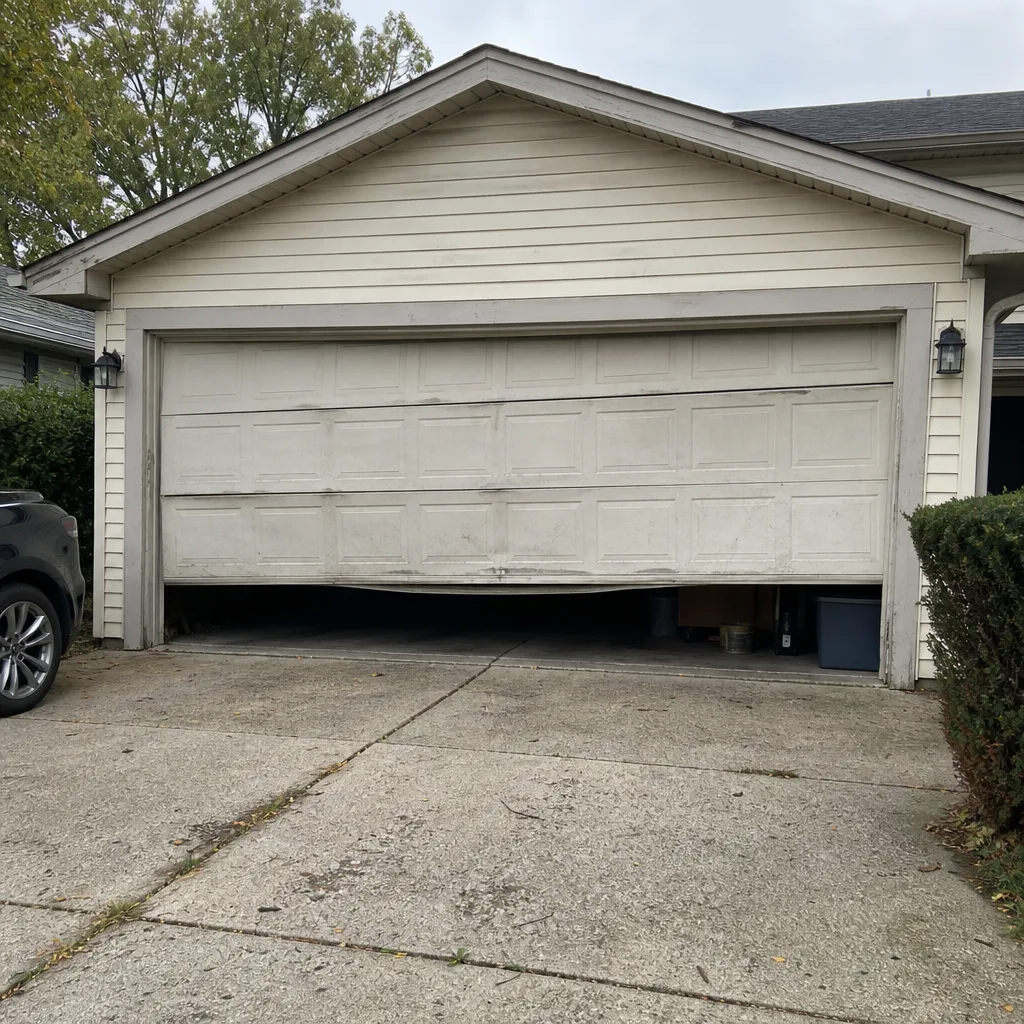 Before
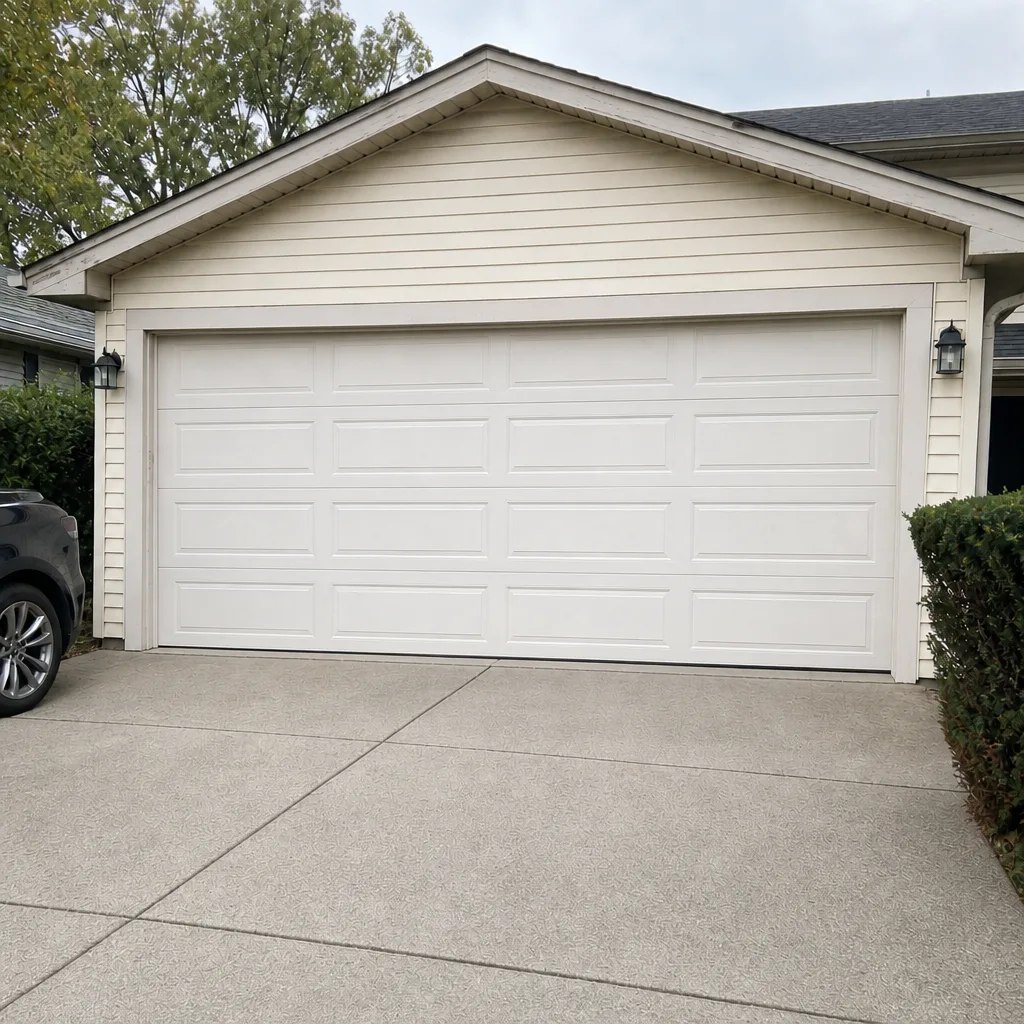 After
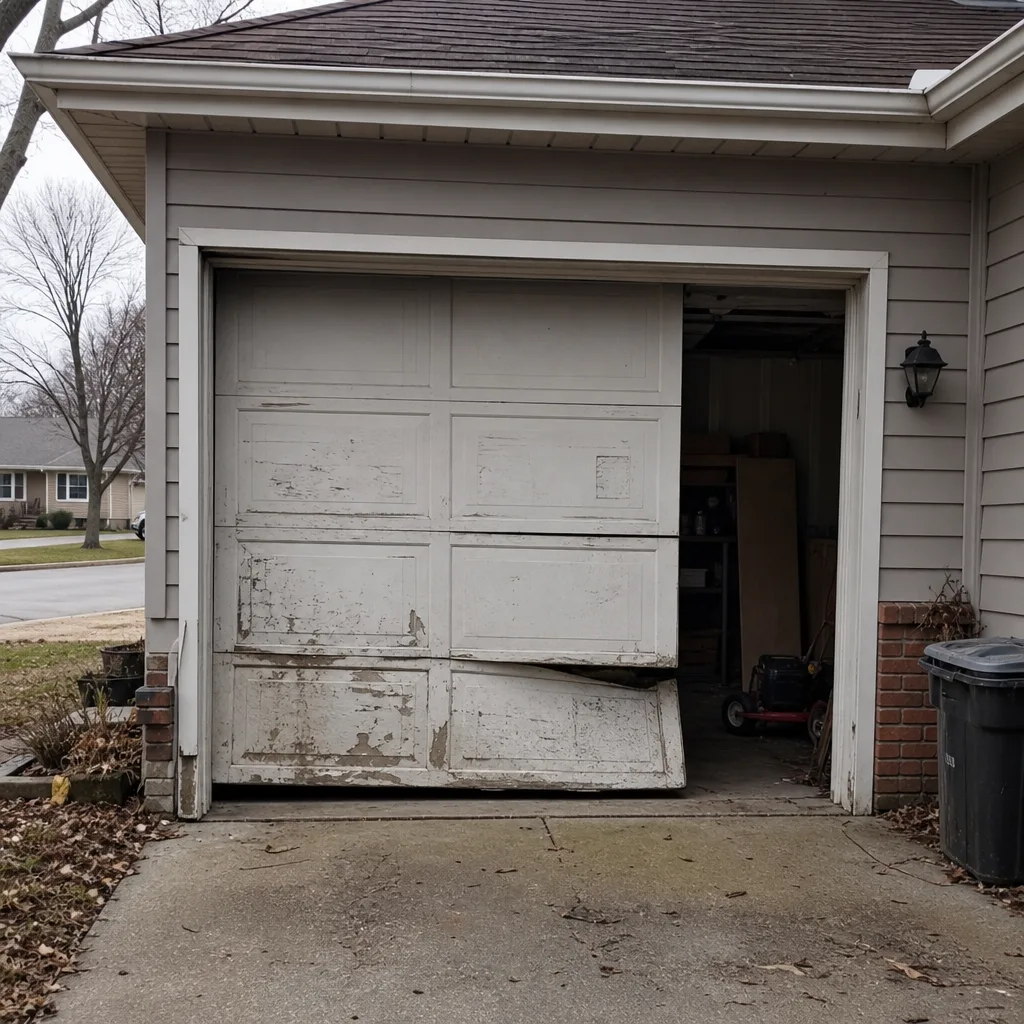 Before
 After
Common Mistakes to Avoid
- Treating a spring like a bicycle part. Springs are not the kind of thing you learn on a first attempt. Just because a metal coil looks simple doesn’t mean it’s safe to work on, and a spring swap with the wrong tools can end with you in the emergency room.
- Buying the cheapest spring on the shelf. A spring needs to match your door’s weight, not fit the budget. A mismatched spring wears out fast or strains the opener, and you’re back to a broken door in less time than the right part would have lasted.
- Assuming a warranty claim will go through after a DIY install. Opener warranties in particular have language about who installs the unit. Check the manufacturer’s documentation before you start, so you know whether a self-install keeps coverage for your brand.
- Working on a shared-wall townhome garage alone. Naperville’s attached townhome garages are common, and the shared ceiling and wall make a sudden failure more dangerous and the liability more complicated. Talk to the owner or association first, and consider a professional for anything beyond basic upkeep.
- Adjusting the opener’s force limits to fix a stiff door. Increasing the force so the opener can drag a struggling door is a bad habit. It hides the real problem and can damage the opener or the door over time. The right move is to find out why the door is stiff.
- Skipping the yearly balance check. A door that doesn’t balance at mid-height is working against the opener every time it moves. It’s an easy test to do, and it tells you when the door needs attention before something fails.
- Calling for a repair before reading the manual. A surprising number of “broken” openers are a travel limit or a sensor out of alignment. The manual is worth five minutes of your time before the phone call.
When to Call a Professional
Call a professional when the work involves a spring, a cable, or anything under tension. Call when the door is off its tracks, when a panel is bent, or when an opener runs but the door doesn’t move reliably. Call when the door is in a shared-wall townhome garage and you aren’t sure what you’re looking at. And call when you’ve tried the basics and the door still isn’t right. Those are the jobs where a specialist saves you time, money, and risk. For the everyday stuff, the lubrication, the balance check, the seal, your own toolbox is enough. When a trained eye would help, we can take a look. Naperville Garage Door Repair Pros offers free estimates in Naperville. Call (866) 947-9076. We answer 24/7. Fast dispatch from 7am to 7pm, Sunday through Friday.
Frequently Asked Questions
No. A torsion or extension spring stores enough energy to cause serious injury if it releases unexpectedly, and the tools and technique required aren’t available to a homeowner in any practical way. A trained specialist should handle spring replacement every time, including the balance check afterward.
It depends on the brand and model. Some manufacturers allow a homeowner install to keep coverage if the door is compatible and safety features are set up correctly. Others require professional installation for the warranty to hold. Read the manufacturer’s documentation for your exact unit before you buy, and if it’s unclear, contact their support line. LiftMaster, Chamberlain, and Genie each write their own terms.
Costs vary by job type and part, and we price per job rather than by a flat rate. The written estimate before work begins is the number that matters, and it’s free to get. Call (866) 947-9076, and we’ll talk through what your door is doing and give you a written price. We answer 24/7. Fast dispatch from 7am to 7pm, Sunday through Friday.
For spring, cable, and any tension work, yes. A shared-wall garage in Naperville means a sudden failure can affect more than your own car or wall, and the liability and insurance side is more complex. Basic upkeep is still yours to handle, but anything under tension belongs with a specialist.
Check the simple things first: the opener’s power, the wall switch, and whether the safety sensors have a light blocking them. If the opener runs but the door doesn’t move, or the door moves but doesn’t sound right, that’s when to call a specialist. If the door won’t move at all, don’t force it, because that can cause more damage.
It can, depending on the brand and how the work is done. Door makers such as Clopay and Amarr write coverage around proper installation and balance. When a door is hung out of balance or the tracks are off, it can be treated as an installation issue rather than a defect, and the warranty can get complicated. Keep the documentation from any repair and check the terms with the manufacturer.
The Bottom Line
Most of the DIY-vs-professional question comes down to one distinction: whether you’re working with stored energy. Lubrication, seals, balance checks, and careful adjustments are safely in your hands, and they’re worth doing because they keep the bigger parts from wearing faster. Springs, cables, and full door installs are not. The risk isn’t just a bad result. It’s a physical hazard, a warranty complication, and in attached Naperville townhomes, a liability question that doesn’t stop at your own wall. Do the basic work yourself, call a specialist for anything under tension, and keep a record of what’s been done to the door.
If you’re not sure which side a job falls on, ask before you start. A quick call usually answers the question in a few minutes, and it’s the cheapest way to avoid the call that happens anyway.
Call (866) 947-9076 for a free estimate. We answer 24/7. Fast dispatch from 7am to 7pm, Sunday through Friday. We cover the full range, from spring and opener work to installation, and we work on the brands in your garage, whether that’s Clopay, Amarr, Wayne Dalton, or the opener you bought last year.
Written by the team at Naperville Garage Door Repair Pros.