
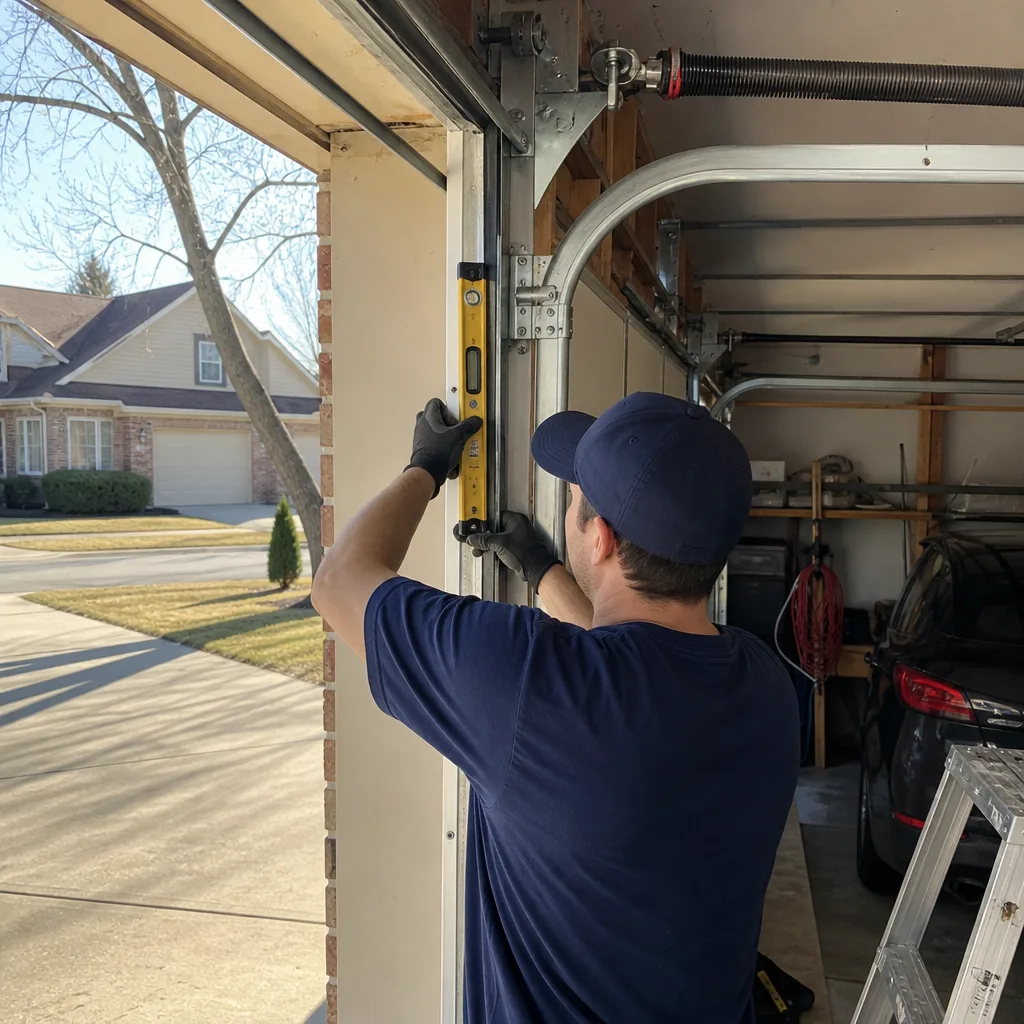
Last updated November 23, 2026
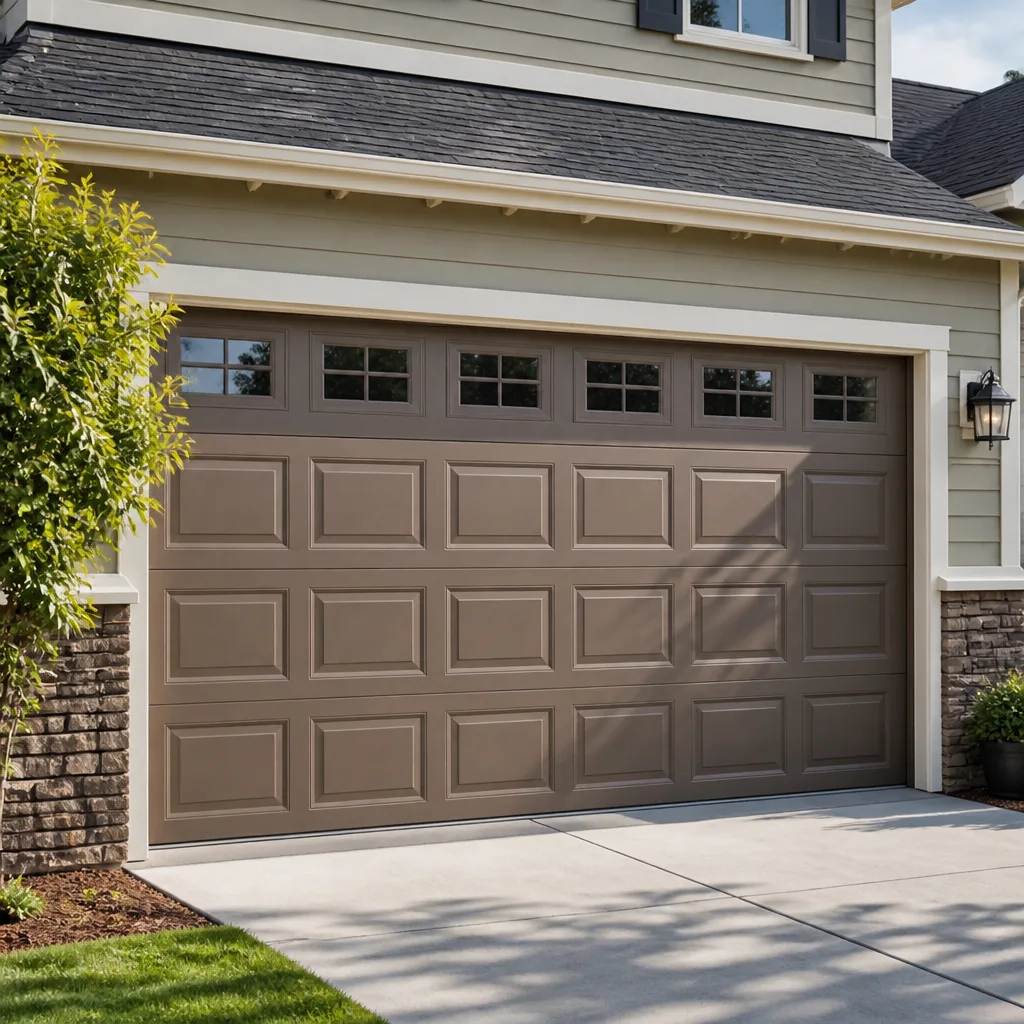 Raised-panel steel
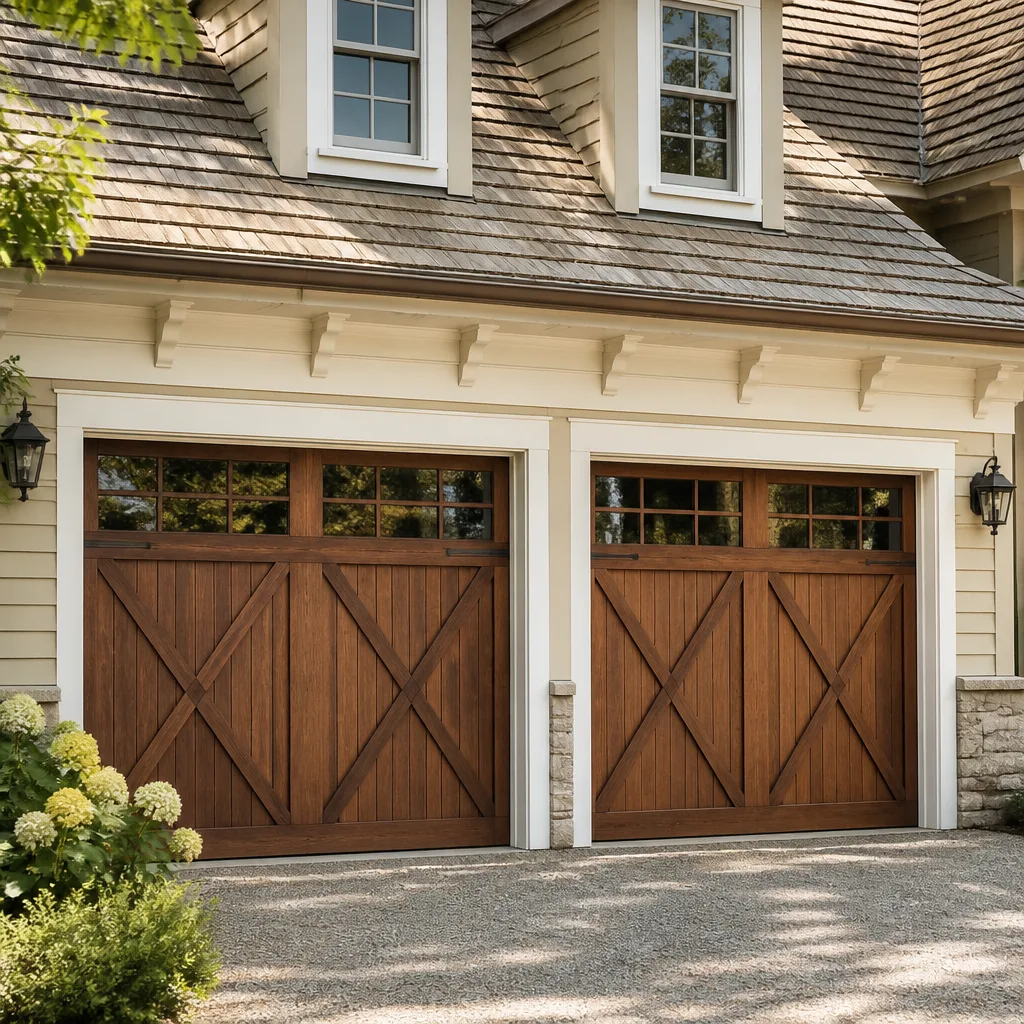 Carriage house
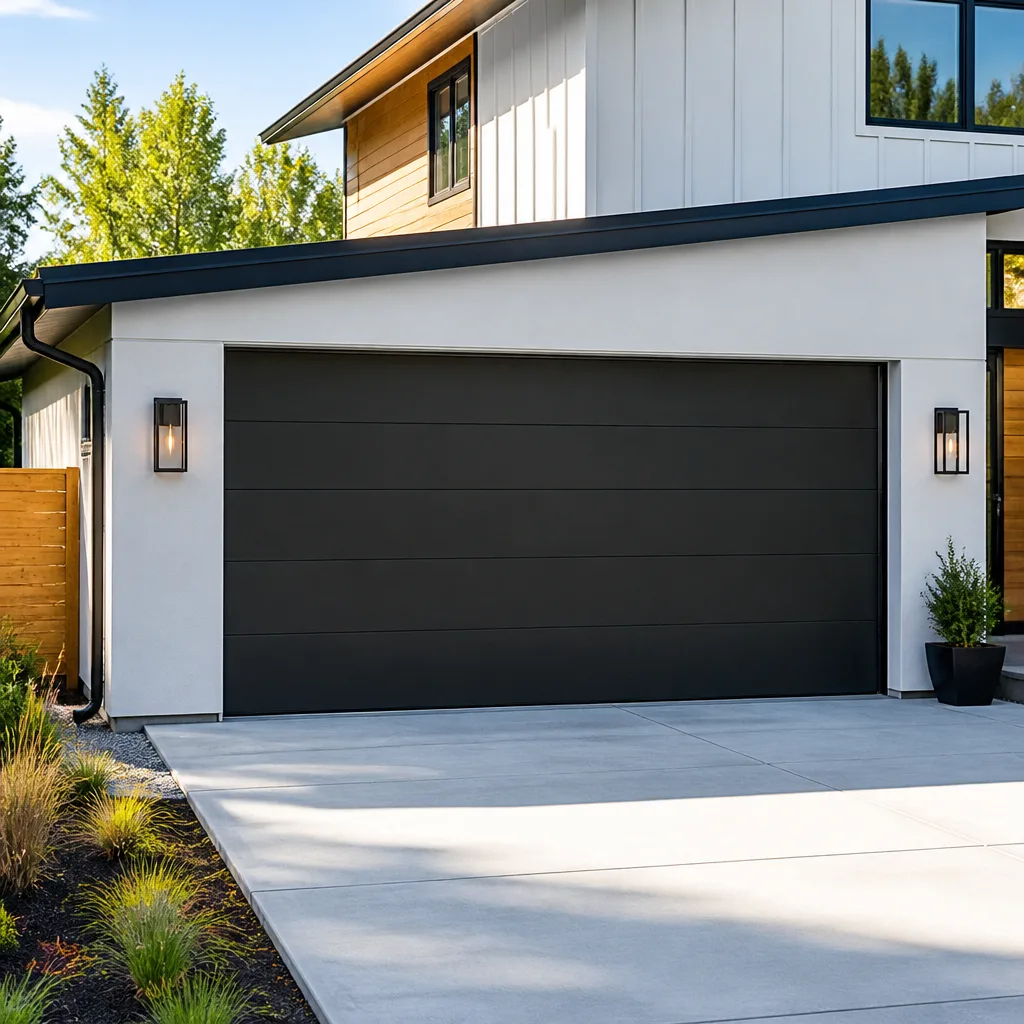 Modern flush
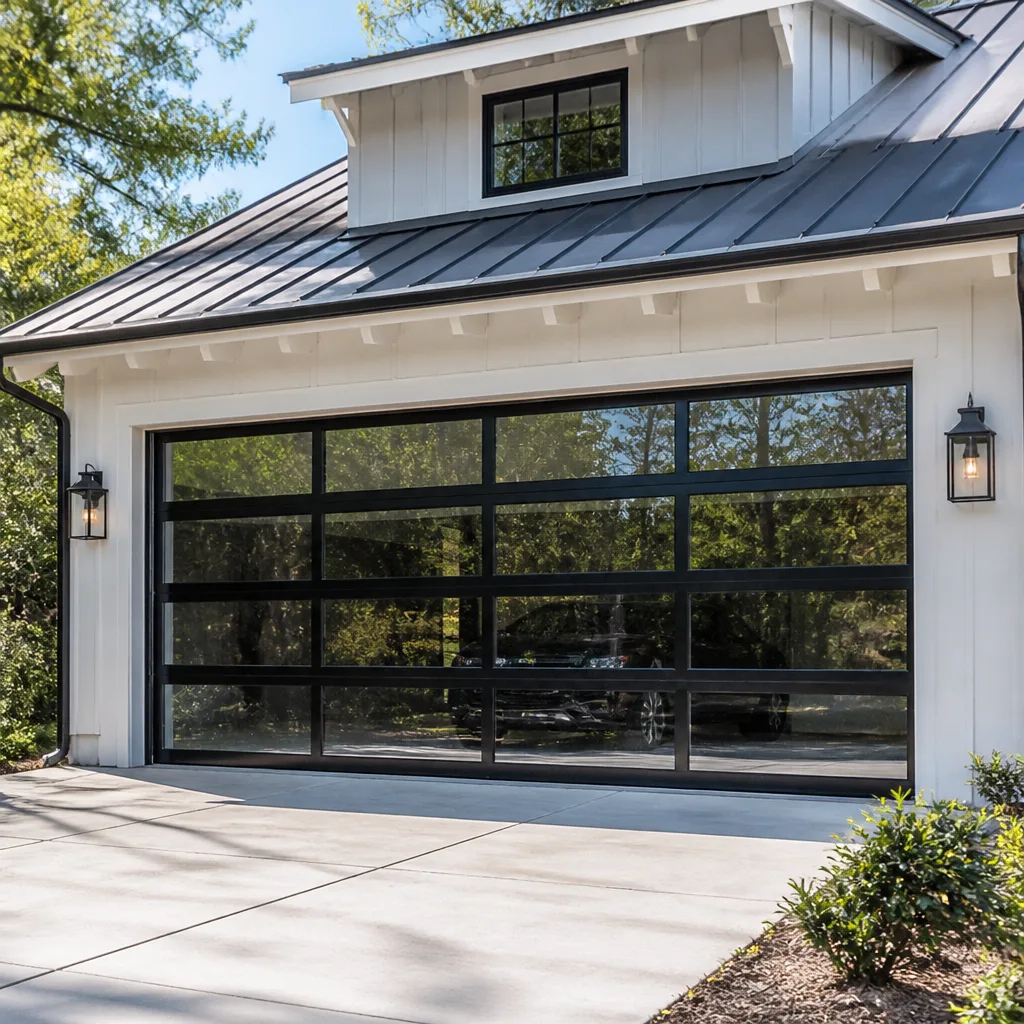 Full-view glass
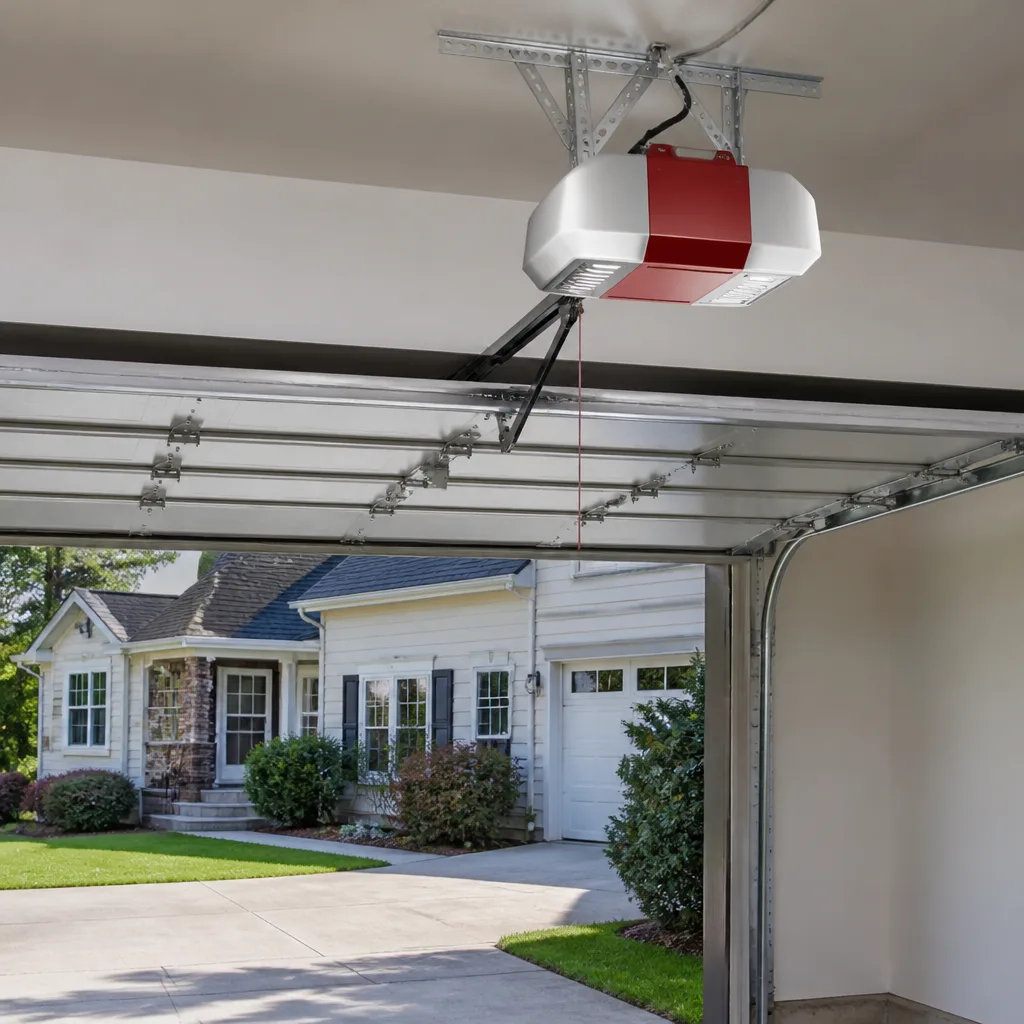 LiftMaster openers
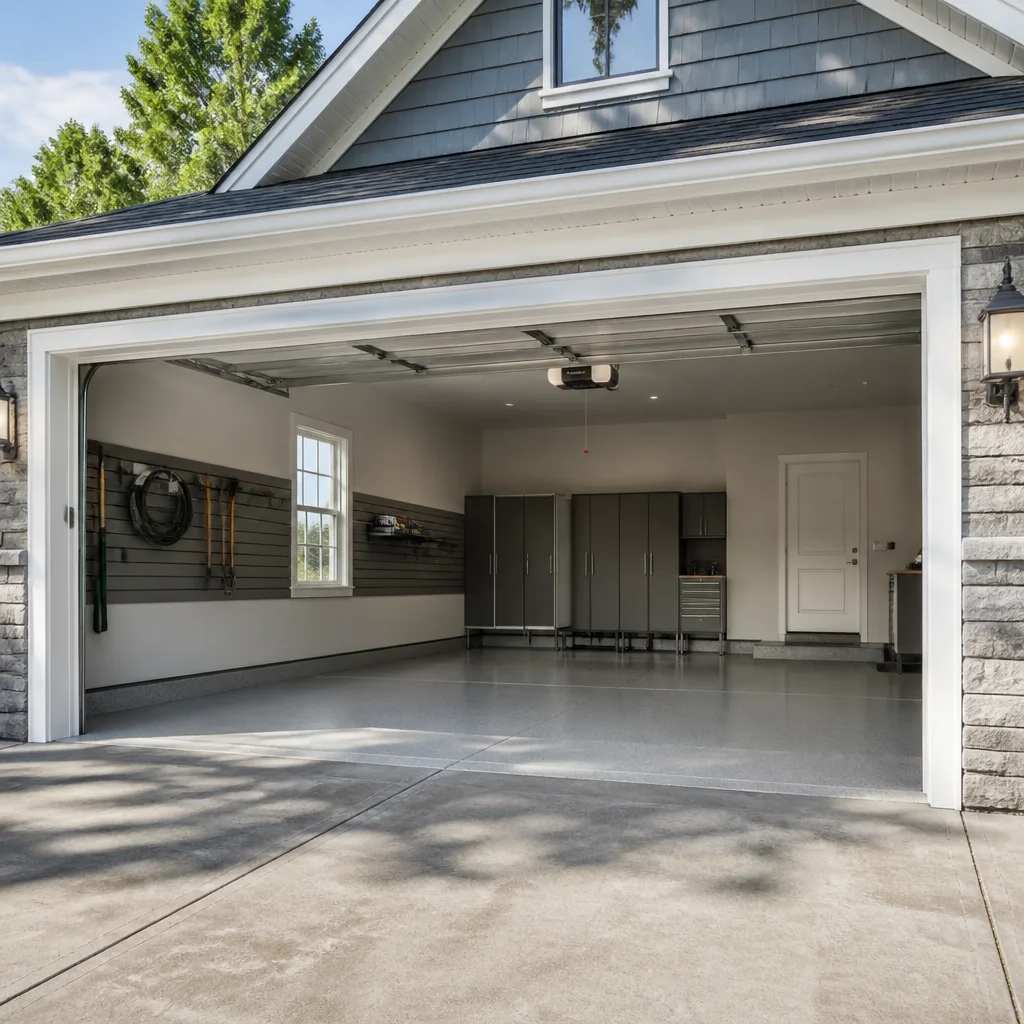 Chamberlain openers
Full 25-point door and opener safety check with every visit - springs, cables, rollers, tracks, and your LiftMaster or Chamberlain opener included
You get a price before we start. It does not change when the pro arrives.
Get your free estimateSeasonal Garage Door Care for Naperville: Year-Round Homeowner’s Guide
Here’s a counterintuitive fact about garage doors in Naperville: most spring failures don’t happen on the coldest night of the year. They happen weeks later, on an ordinary morning. The damage was done slowly, all fall, as cold steel contracted and dried-out metal wore against itself without lubrication. By the time January arrives, the spring is already past the point of no return. Our four distinct seasons don’t just bring different weather, they create four different failure modes, each with its own warning signs and its own prevention window. This guide walks you through all four, then gives you one quarterly routine that covers the riskiest points in a single pass.
Quick Answer
Seasonal garage door care in Naperville means matching maintenance to the real stresses each season puts on your door: fall lubrication for cold contraction, winter care for freeze-ups and bottom seals, spring inspection of cables and drums after months of cold-cycle wear, and summer attention to thermal expansion in wood and steel panels. A 15-minute check every quarter, plus a tube of the right low-temperature lubricant, prevents most of the expensive failures that show up in January and February.
Styles & brands we work with
- Raised-panel steel
- Carriage house
- Modern flush
- Full-view glass
- LiftMaster openers
- Chamberlain openers
Table of Contents
- Fall: The Lubrication Protocol That Prevents January Failures
- Winter: A Door Frozen to the Ground and What Not to Do
- Spring: Inspecting Cables and Drums After Cold-Cycle Wear
- Summer: Thermal Expansion, Panel Gaps, and Humidity
- The 15-Minute Quarterly Check Routine
- When to Stop and Call a Specialist
- Common Mistakes to Avoid
- Frequently Asked Questions
Fall: The Lubrication Protocol That Prevents January Failures
Fall is the single most important season for garage door maintenance in Naperville, and lubrication is the reason. As temperatures drop from the 60s into the 20s and below, every metal component on your door contracts. Springs, hinges, rollers, and torsion bars all move through that cycle, and metal that’s running dry grinds against itself with every open and close. Lubricant applied in October is what carries a spring through the cold months. Lubricant applied in November or December, after the first hard freeze, is much less effective because it sits on top of metal that’s already contracted and under load.
Not every lubricant works in Illinois winter conditions. This matters more than most homeowners realize.
- Use a lithium- or silicone-based lubricant rated for low temperatures. Products that stay viscous below freezing protect the hinges, rollers, and spring coils without collecting grit.
- Avoid heavy grease and generic multi-purpose oil. These thicken as temperatures drop and can leave a gummy residue on the spring coils and track that actually freezes, adding drag to the opener and making the door harder to lift.
- Skip WD-40 as a long-term lubricant. It’s a solvent and displaces moisture well, but it doesn’t provide lasting protection for moving parts.
Apply lubricant to the torsion spring coils (a light coat along the length, not a soak), all the hinges at their pivot points, and the roller bearings. Wipe the tracks with a dry cloth instead of lubricating them, since tracks should be clean and dry, not greasy, or the rollers will slide instead of roll.
The specific components in this routine matter because they’re the ones that fail first when lubrication is neglected. A Wayne Dalton or Clopay torsion spring running dry through a Naperville January is a spring under extra stress with every cycle. Fall lubrication is cheap insurance against the most common emergency call we take in the coldest months.
Winter: A Door Frozen to the Ground and What Not to Do
When a garage door freezes to the ground, the temptation is to hit the opener button repeatedly, or the manual release, or to force the door by hand. Every one of those moves risks damage: stripped opener gears, a torn bottom seal, or a bent bottom section. The right response is patient and specific.
- Disconnect the opener first. Pull the manual release cord so the opener motor isn’t straining against a door that won’t move. This protects the drive gears.
- Look for the actual sticking point. A door frozen to the ground means ice has bonded the bottom seal to the concrete. Look under the door with a flashlight to confirm, rather than assuming.
- Apply de-icer, not hot water. Warm water refreezes and makes things worse. A standard de-icing product, or a mix of warm water and salt applied to the sidewalk under the seal, breaks the bond without damaging the rubber.
- Once free, lift the door by hand first. Before reconnecting the opener, raise and lower the door manually to confirm it moves freely. Then reconnect.
- Check the bottom seal after each freeze event. Repeated freezing and thawing makes rubber brittle over a season. A seal that’s cracked or stiff lets cold air and moisture underneath, which accelerates the next freeze-up.
Prevention is mostly about drainage. In Naperville, where the freeze-thaw cycle runs through most of January and February, water pooling against the garage apron is the main cause of a door sticking to the ground. Clear the snow away from the door instead of piling it against it, and keep the apron clear of standing water.
If the door is frozen and you’re not sure whether the opener is already damaged, a garage door repair call is worth it before you reconnect. Some of the winter calls we get are really opener failures set in motion by a homeowner who ran a stuck opener too many times.
Spring: Inspecting Cables and Drums After Cold-Cycle Wear
Spring is when the accumulated wear of winter becomes visible. A garage door that survived January may still have been through hundreds of cold cycles, and the cables and drums that guide the door absorbed every one. A cable that’s frayed at the drum, or a drum that’s slipped out of its wind, is a real failure risk that most homeowners never check. Our technicians look at these specifically, because they’re the parts that a routine owner inspection can miss.
Here’s what to look at, from a safe distance and with the door closed and the power disconnected:
- Cable condition. Look for fraying, kinks, or a cable that’s jumped its groove on the drum. Any of these mean stop using the door until a technician looks at it.
- Drum position. The cable should wind evenly in the drum grooves, and the drum should be seated firmly against the torsion shaft. A drum that’s wandered sideways is a symptom of uneven cable tension.
- Spring balance. With the manual release engaged, the door should lift with one hand and stay at roughly half-open without help. A door that won’t hold position or drops on its own needs a technician.
- Track alignment. Winter freeze-thaw can shift the concrete slab slightly, and that can throw off the track’s plumb. Look for visible bends or a track that’s pulling away from the jamb brackets.
The highest-risk parts of this inspection (springs and cables) are not DIY. High-tension springs hold tension stored up over hundreds of cycles, and a spring under tension can release without warning. That’s why spring work is a specialist job. If you hear a loud bang and the door won’t lift, that’s a broken spring, and it needs a phone call, not a hardware store run.
A spring that’s been stressed through one too many winters can fail even if it hasn’t broken yet. Spring replacement should be handled by a trained technician using the right tools, and a matched pair is usually replaced together rather than one at a time. That’s a conversation for the estimate, which will tell you what the door actually needs.
Summer: Thermal Expansion, Panel Gaps, and Humidity
Summer in Naperville brings the opposite problem: thermal expansion. Wood doors swell in the humid months, and steel doors expand across their width. That shows up as panel gaps that appear or widen in July, or as a door that suddenly drags or hangs up in the track. Sometimes a gap is entirely cosmetic. Sometimes it’s the first sign of something that needs adjustment. Here’s how to tell the difference.
A cosmetic gap is one where the panel is still square, the hardware is tight, and the door operates smoothly. Paint separation along a panel seam is cosmetic if the wood underneath is sound and dry. Structural issues look different:
- A panel that’s warped or bowed rather than just showing a wider seam. Warping means the wood is absorbing moisture unevenly, and the panel may need replacement.
- Hardware pulling loose from the jamb or panel as the door expands. This is a sign the fasteners are losing grip as the material moves.
- The door dragging or hanging up in the track in the summer, which can mean the track has shifted or the door is temporarily out of square due to expansion.
- A gap that appears and closes with the weather which is almost always thermal and rarely structural.
Wood doors benefit from a yearly inspection of the finish. A seal that’s cracked in a dry spell lets moisture in during the humid stretch, which accelerates swelling and rot. Steel doors are more dimensionally stable, but the same principle applies to the bottom edge and the hinge points.
For a Craftsman or Raynor door that suddenly hangs up in July, don’t force it. The diagnosis is usually a simple adjustment, but forcing a door that’s binding can damage the opener. That’s the point where a garage door opener repair visit doubles as a door adjustment, since the opener is often the part that gets stressed first.
The 15-Minute Quarterly Check Routine
You don’t need a separate routine for each season. One 15-minute quarterly check covers the highest-risk failure points across the whole year, and it’s the routine our technicians recommend to every Naperville homeowner we visit. Do it with the door closed and the opener disconnected (pull the manual release).
- Operate the door by hand. Lift it halfway and let go. It should hold position, and it should move smoothly without a grinding sound. If it won’t hold, or it drops, the spring balance is off.
- Look at the springs and cables. From a distance, check for broken coils, fraying cables, or cables that have jumped the drum. Don’t touch these; if either looks wrong, stop and call.
- Check the hinges and rollers. Wipe them clean and apply a light coat of low-temperature lubricant. Wipe the tracks dry with a cloth.
- Test the safety reverse. With the opener reconnected, place a small block of wood on the floor under the door’s path and close the door. It should reverse on contact. This is the most important safety check on the whole list.
- Check the weather seal along the bottom. Look for cracks, stiffness, or gaps. A seal that’s failing should be replaced before the next freeze cycle.
- Look at the door panels. Run a hand along the seams (with the door closed) and check for gaps that have widened since your last check. Note whether they close up in cooler weather.
Do this in early October, January, April, and July. Those four windows put you ahead of every season’s peak risk: the winter freeze, the spring cable check, the summer expansion, and the fall lubrication. A quarter-hour of attention four times a year is the single highest-return maintenance habit for a garage door in Naperville.
The same routine works across brands because the failure points are mechanical, not model-specific. On a LiftMaster or Chamberlain door with a belt-drive opener, the manual test confims the opener isn’t masking a balance problem. On a Wayne Dalton or Clopay door, the panel and seal check catches the wear first.
When to Stop and Call a Specialist
Some of what’s described in this guide is safe for a homeowner to handle. Some of it absolutely isn’t. Understanding the line matters for your own safety, not just the door’s health.
Safe to handle yourself: lubricating hinges and rollers, wiping the tracks, replacing a worn bottom weather seal, checking the safety reverse, and observing spring and cable condition from a distance.
Not safe, call a technician: anything involving the torsion or extension springs, the cables, or the drums. These parts carry stored energy from hundreds of cycles. A spring under tension can release without warning, and the forces involved are serious enough to cause injury. Our technicians have up to 15 years of experience, and they use a trained two-person approach on spring and cable work. That’s not a matter of being careful; it’s a matter of the tools and technique involved.
There’s also a diagnostic layer here that matters. Opener failures are a separate category from mechanical door problems, and the symptoms overlap. A door that won’t close could be a broken spring, a misaligned safety sensor, a stripped gear on the opener, or a control board fault. Diagnosing by brand behavior narrows it down quickly; guessing wastes time and money. When a door stops responding, a garage door opener repair visit starts with identifying the actual cause before any part is replaced.
If your door is off its tracks, stuck, or making a loud noise on operation, that’s the moment to call rather than experiment. Emergency situations where a car is blocked or the house is unsecured are exactly the calls we take seriously, and the fix often happens the same day.
Common Mistakes to Avoid
- Using grease on the springs and tracks. Grease thickens in the cold and leaves a gummy residue on the coils that actually freezes overnight. A low-temperature lubricant belongs on the springs, and the tracks should stay dry.
- Forcing a frozen door open. Hitting the opener repeatedly when the door won’t budge is how opener gears get stripped. Disconnect the opener, de-ice the seal, and test by hand before reconnecting.
- Ignoring a broken spring. A door with a broken spring is running on half its designed support. Operating it risks damaging the opener, the cables, and the panels, and it’s not safe to be under. Stop using the door and call.
- Assuming a panel gap is cosmetic without checking. Some gaps close up when the weather changes, and some are the first sign of a warped panel or loose hardware. A quick operation test tells you which.
- Skipping the safety reverse test. It’s the single most important safety check on the door, and it takes 30 seconds. A door that doesn’t reverse on contact should not be operated until it’s fixed.
- Lubricating in December instead of October. By December, the metal’s already contracted and the first freeze-ups have happened. Fall lubrication is what carries the door through the cold months.
- Trying to adjust springs or drums yourself. These are the parts with stored energy. There’s no careful way for a homeowner to do it without the right tools and training, and the risk isn’t worth it.
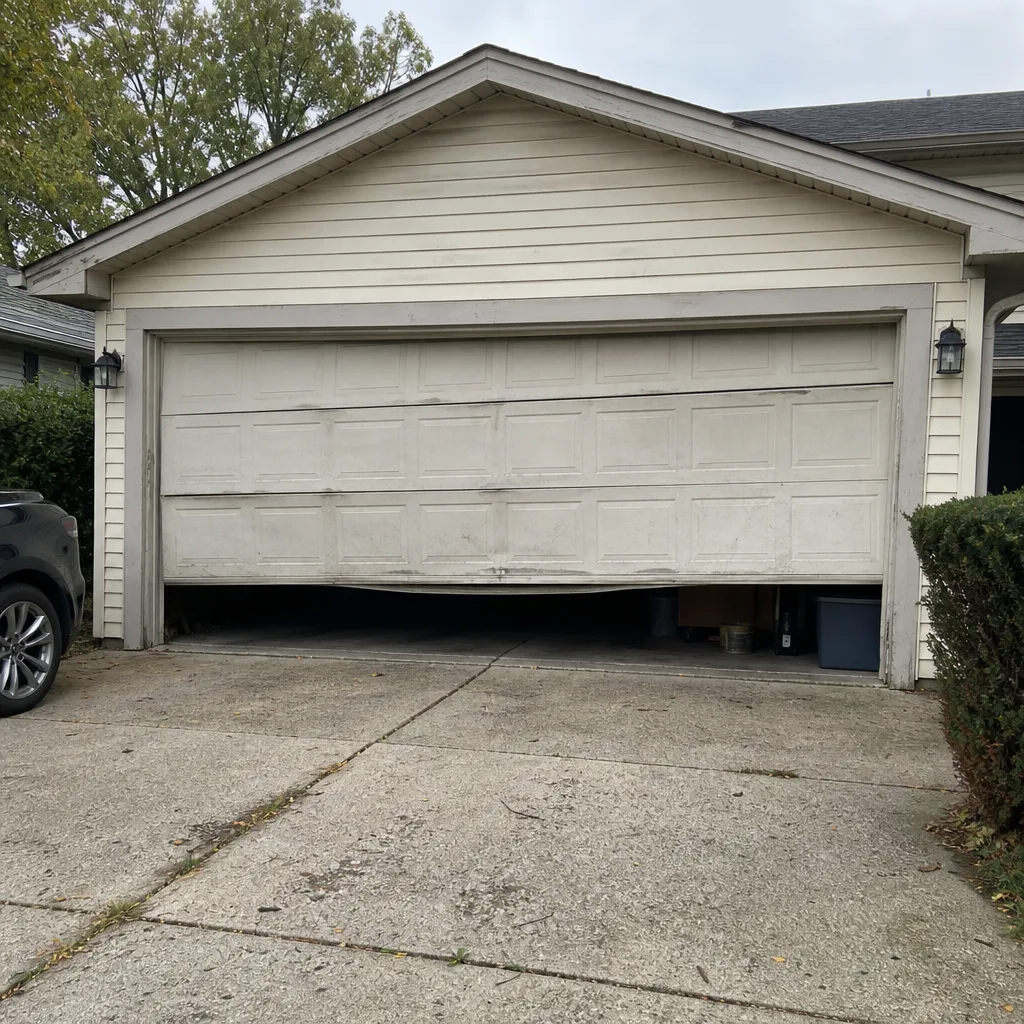
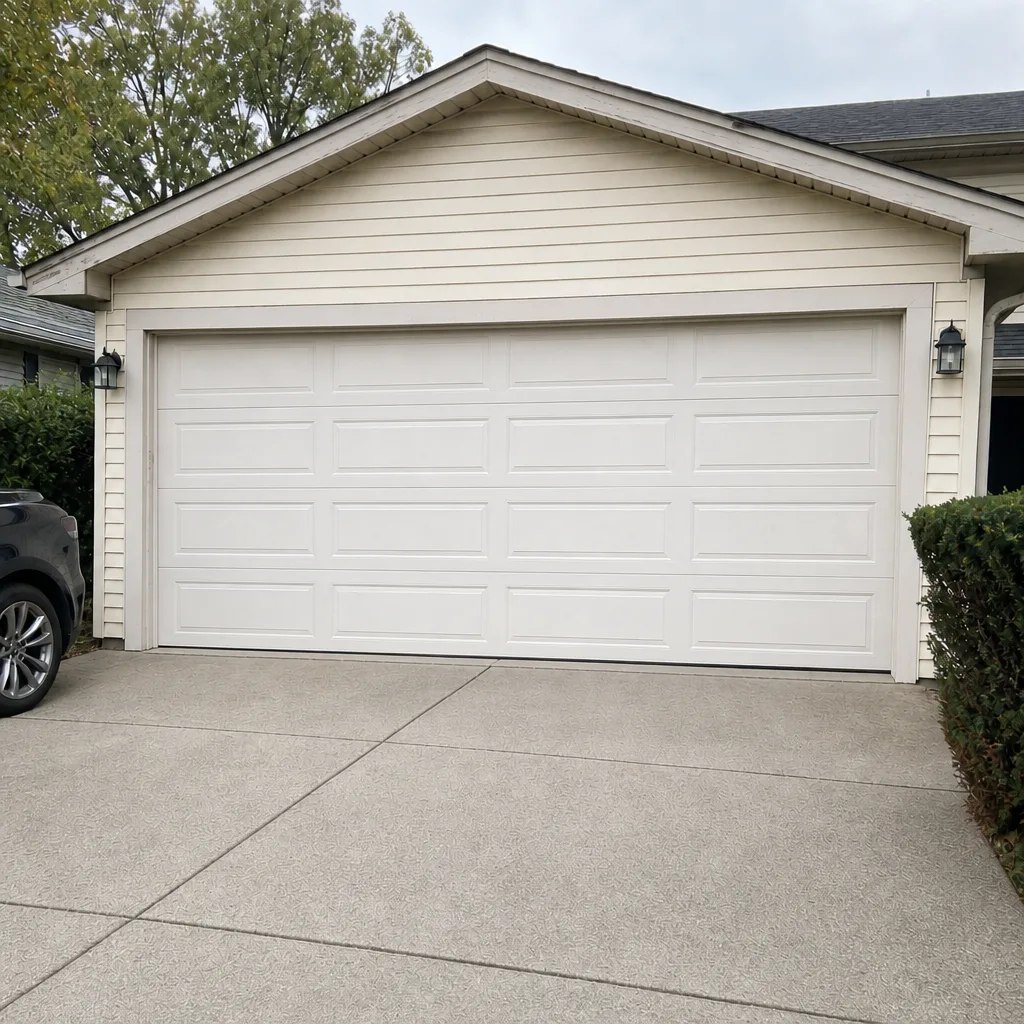
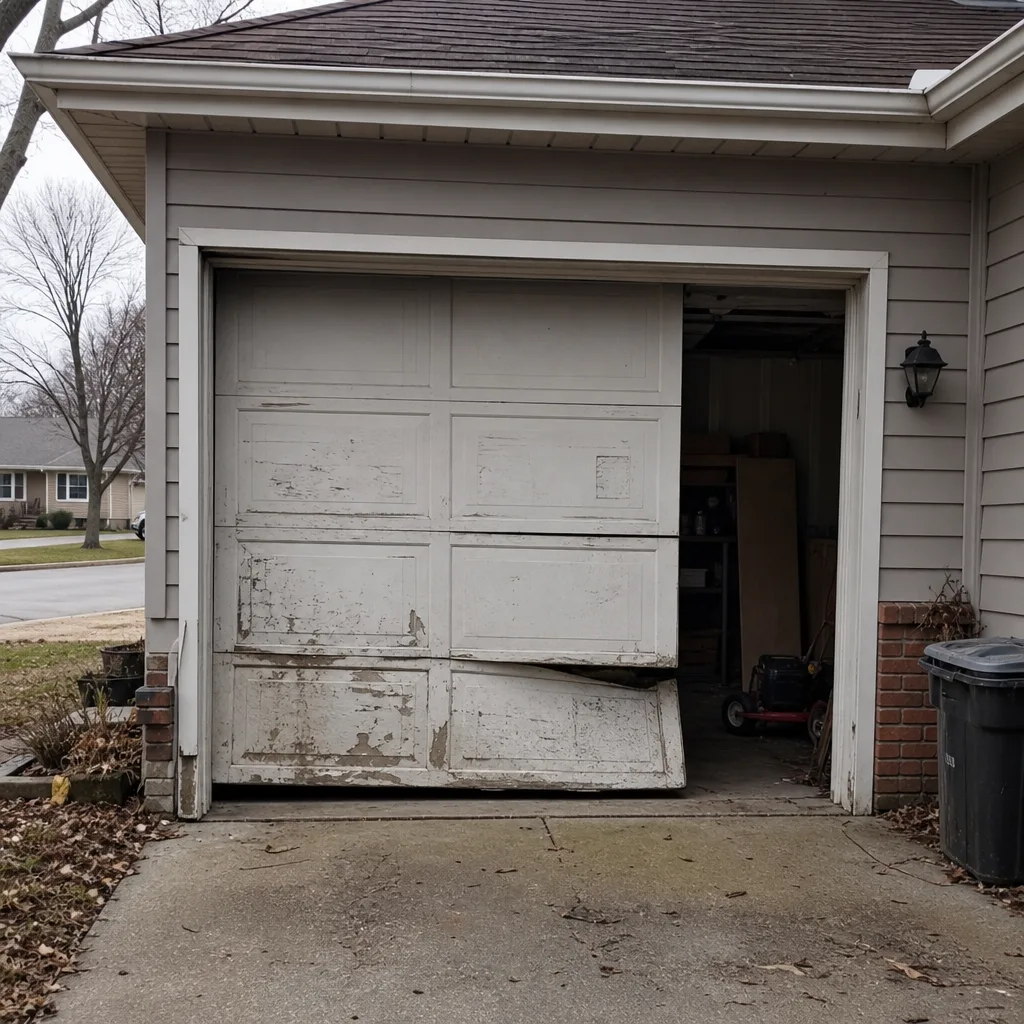
See the difference
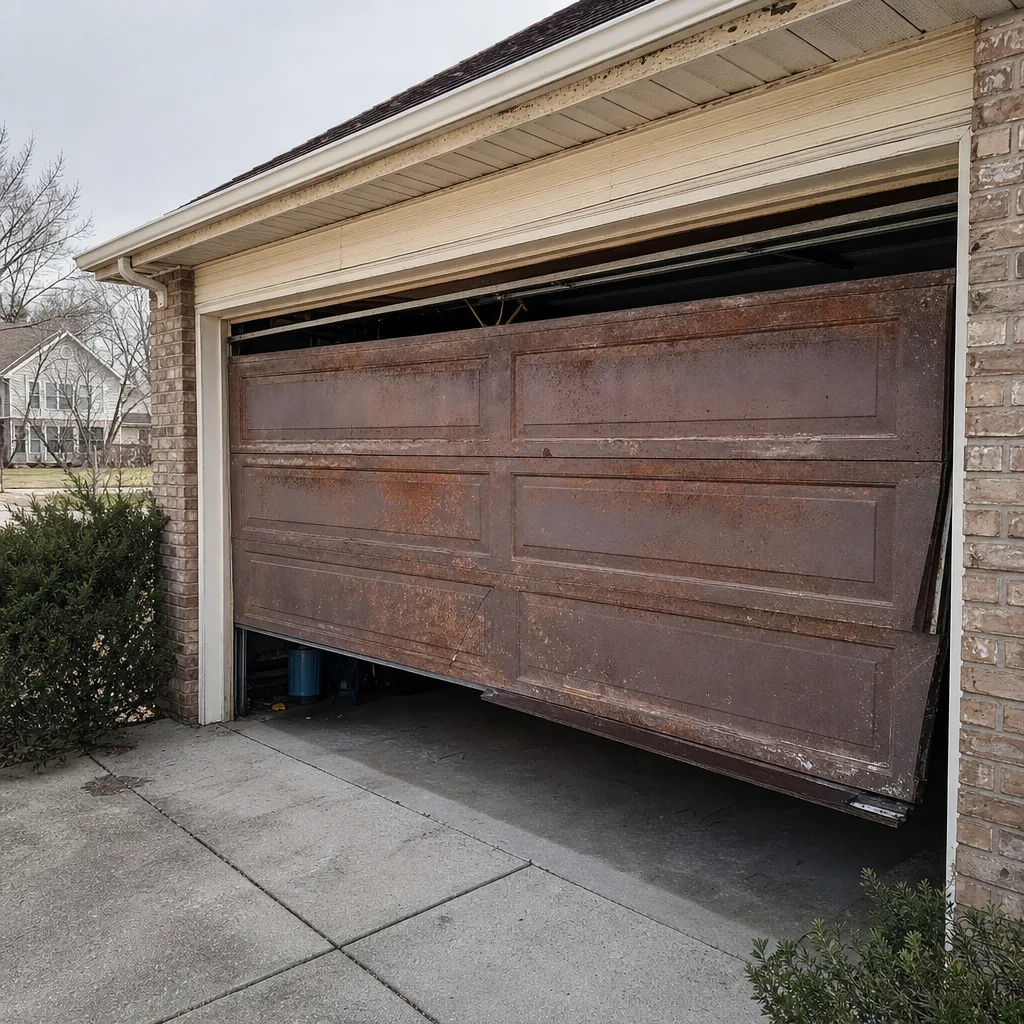 Before
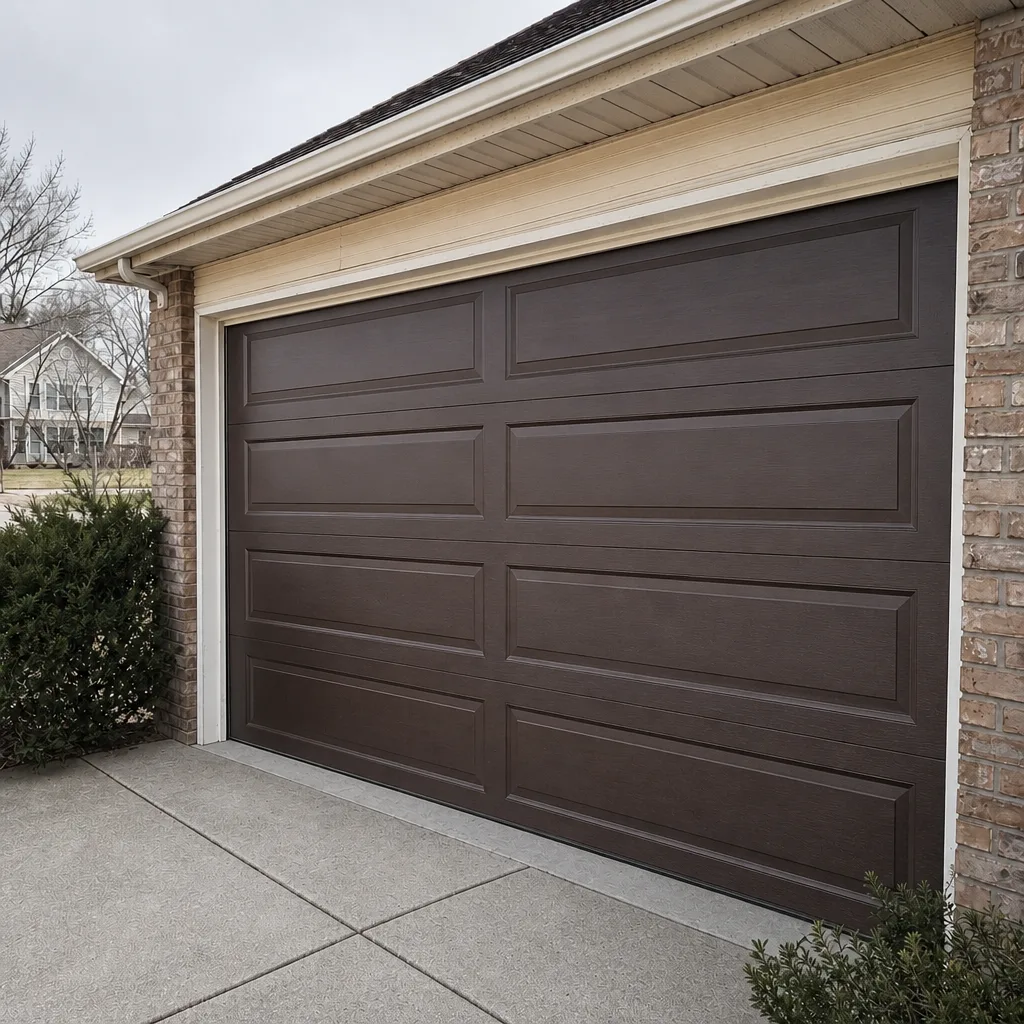 After
 Before
 After
 Before
 After
When to Call a Professional
Call a specialist when the door makes a loud bang and won’t lift, when the cables look frayed or have jumped the drums, when the door is off its tracks or visibly out of square, or when the opener runs but the door doesn’t move (or moves only in one direction). Also call if a panel gap turns out to be structural, or if the door is frozen and you can’t tell whether the opener was already damaged. Naperville Garage Door Repair Pros offers free estimates in Naperville. Call (866) 947-9076.
We answer 24/7. Fast dispatch from 7am to 7pm, Sunday through Friday. The price is set per job by the written estimate, and it’s quoted before any work starts. If the full door is at the end of its life rather than repairable, a garage door installation is the right conversation, and one we handle as a single-source provider rather than a referral.
Frequently Asked Questions
Once in the fall, before the first hard freeze, and once again at the start of summer. The fall application is the critical one, because it has to carry the metal components through the contract-and-expand cycle of an Illinois winter. Use a low-temperature lubricant on the springs and hinges, and leave the tracks dry.
No, not safely. A door with a broken spring is supported by half its designed system, and operating it risks damage to the opener and the remaining spring, and it’s not safe to be underneath. Call for spring repair instead. Spring repair is a specialist job, and the fix is usually done the same day. Call (866) 947-9076 for a free estimate.
It shouldn’t, and that’s the point of the written estimate. The price is quoted and agreed before any work starts, so what you’re quoted is what you pay for the work described. If the technician finds something during the visit that wasn’t visible before, that gets discussed with you before any additional work is authorized.
Sticking is common in Naperville winters, but it’s not normal in the sense of being unavoidable. Most winter sticking is caused by the bottom seal freezing to the concrete, which is prevented by keeping the apron clear of standing water and the seal in good condition. If the door is stiff even when the weather’s mild, that’s usually a lubrication or balance issue rather than a freeze.
The local professional we connect you with is licensed and insured as their state requires. Our technicians have up to 15 years of experience, and we work on the eight brands most commonly found in residential garages, so the diagnosis starts from brand familiarity rather than guesswork.
The safety reverse test, and it’s the one check we never skip. Place a block of wood under the door, close it, and watch for it to reverse on contact. It’s the fastest way to confirm the door is safe to operate, and it’s the check with the most direct impact on household safety. A door that fails this test shouldn’t be used until it’s repaired. Call (866) 947-9076 to book a visit.
The Bottom Line
Naperville’s four seasons stress a garage door in four different ways, and each one has a clear prevention window. Fall lubrication is the highest-return habit, because it’s what carries the springs and hardware through the cold months. Winter is about dealing with a frozen seal without damaging the opener. Spring is the time to inspect cables and drums after months of cold-cycle wear. Summer is when thermal expansion shows up as panel gaps, and reading those gaps correctly saves you from unnecessary repairs. Add the 15-minute quarterly check, and you’ve covered the biggest failure points in one routine. For anything involving springs, cables, or a door that’s stuck or off its tracks, call a specialist. Naperville Garage Door Repair Pros is a garage door specialist, not a general handyman service, and the right fix for your specific door starts with a proper diagnosis.
Call (866) 947-9076 for a free estimate on any of the above. We answer 24/7. Fast dispatch from 7am to 7pm, Sunday through Friday. Whether it’s a seasonal tune-up, spring repair, an opener that’s quit, or a full new door, we’ll tell you what the door actually needs and quote it before we start.
Written by the team at Naperville Garage Door Repair Pros.